Skip to content
SA Best Towing
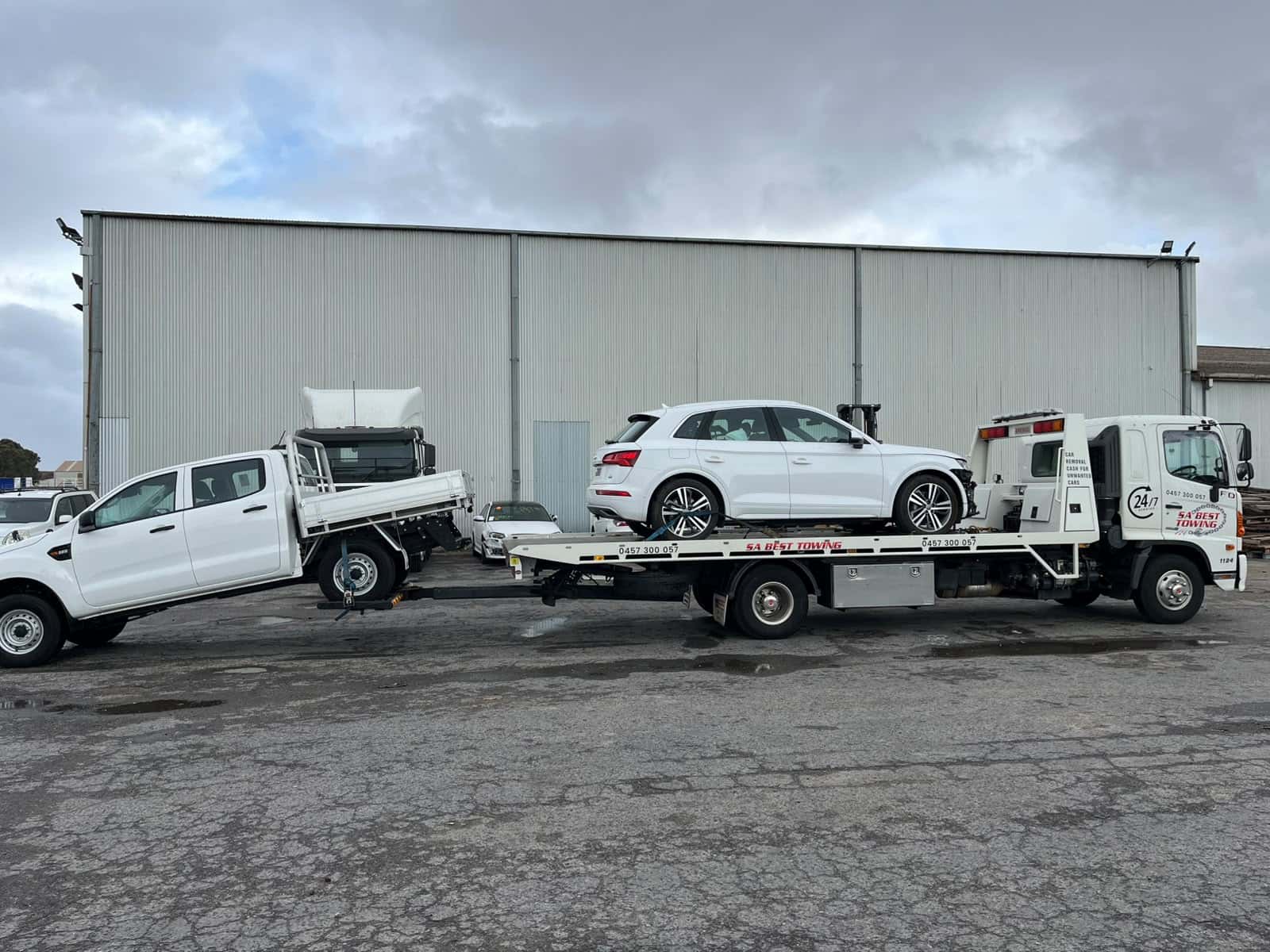
White Audi Q5 with front-end damage on the SA Best Towing tilt tray, a white Ford Ranger tray-back ute on the rear lift, beside a large shed

Tilt tray towing in Adelaide

A tilt tray carries the whole vehicle on a flat steel deck, so the wheels leave the road and the gearbox stays still. Ours has a rear lift too, which lets a second vehicle make the same trip.

Call 0457 300 057
4.8 on Google from 41 reviews

In short

A tilt tray is a tow truck with a steel deck that tips down to the road, so the driver can winch a vehicle on and carry it with all four wheels off the ground. SA Best Towing runs a Hino tilt tray in Adelaide from its yard in Angle Park, with a rear lift for a second vehicle.

Jobs we can take

All-wheel-drive and 4WD

All four wheels connect to the drivetrain, so none of them should turn on the road. On the tray, none of them do.

Low and lowered cars

A long front overhang and a low splitter need a shallow loading slope. Tell us the ride height when you call.

Cars that won’t roll

Seized brakes or a collapsed wheel. The winch draws the car up the tray slowly.

Motorbikes

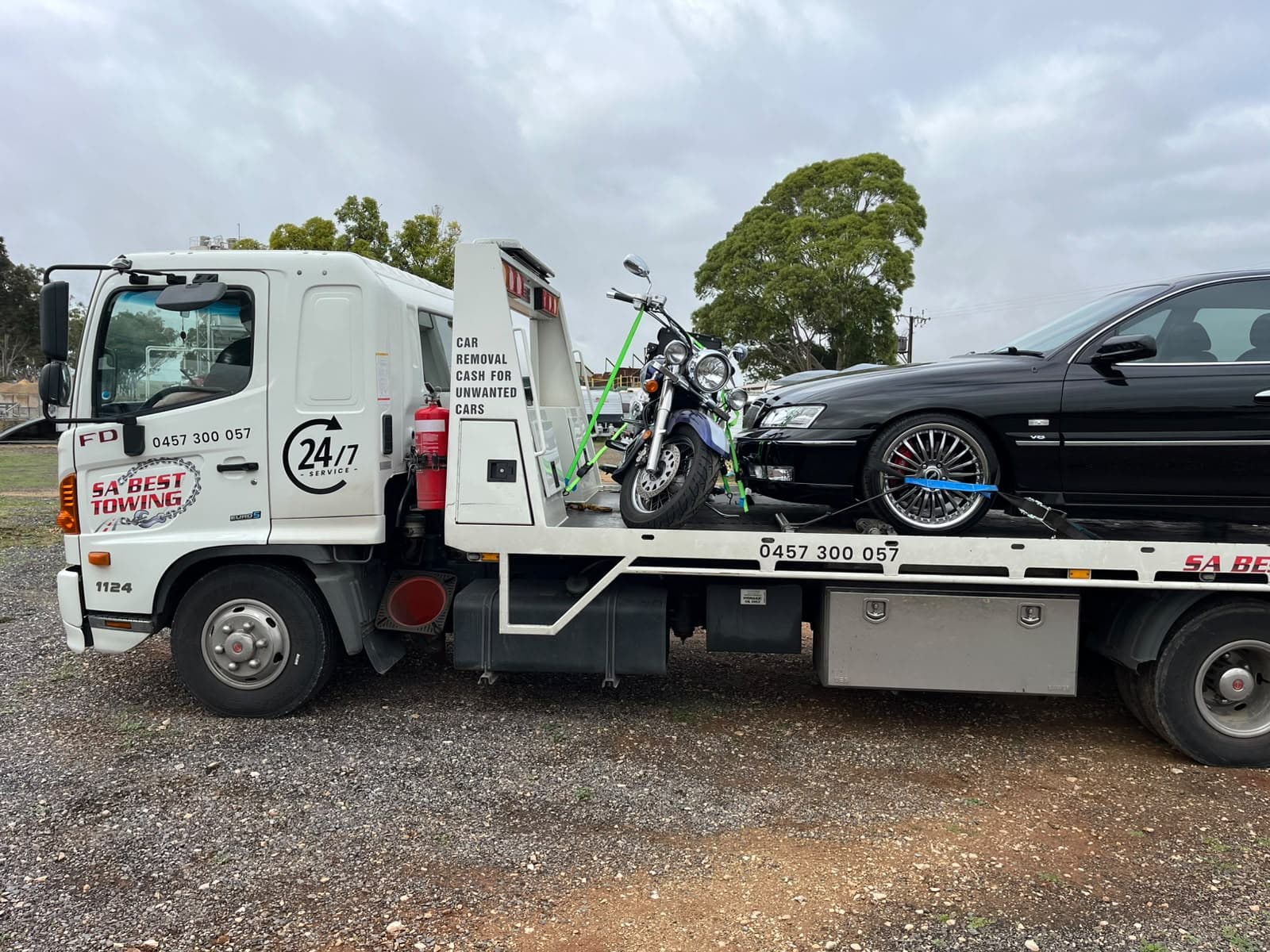
Strapped upright behind the headboard, with room left on the deck for a car.

Two vehicles from one address

A pair of work vans, or a car and the ute that tried to tow it home. One goes on the tray and the other on the rear lift.

How the tray loads a car

The deck tips back until its rear edge rests on the road at a shallow slope. The driver hooks the winch cable to a towing point on the car, draws it up the deck, then levels the tray with the car on top.

Next the driver ratchets a strap over each tyre and down to the deck. Holding the car by its tyres leaves the suspension free to move as it would on the road, and keeps the straps off the panels and bumpers.

Tilt tray, wheel lift and the old hook and sling

A hook and sling truck lifts one end of a car with chains and a sling pressed against the bumper, which cracks modern plastic bumpers.

A wheel lift cradles one axle by the tyres and tows the car on its other two wheels. That works for a short tow of a two-wheel-drive car in neutral. For all-wheel-drive cars and anything with a broken driveline, the wheels left on the road keep turning parts that should stay still. Subaru, for one, tells owners a flatbed is the way to move its cars.

On the tilt tray, all four wheels sit on steel. The engine, gearbox and diffs stay still from pickup to drop-off, which suits low cars, 4WDs, motorbikes and cars that won’t roll.

Two vehicles, one trip: the rear lift

The rear lift sits at the back of the tray. It raises one end of the second vehicle, which rolls behind on its other axle. The driver picks which end to lift.

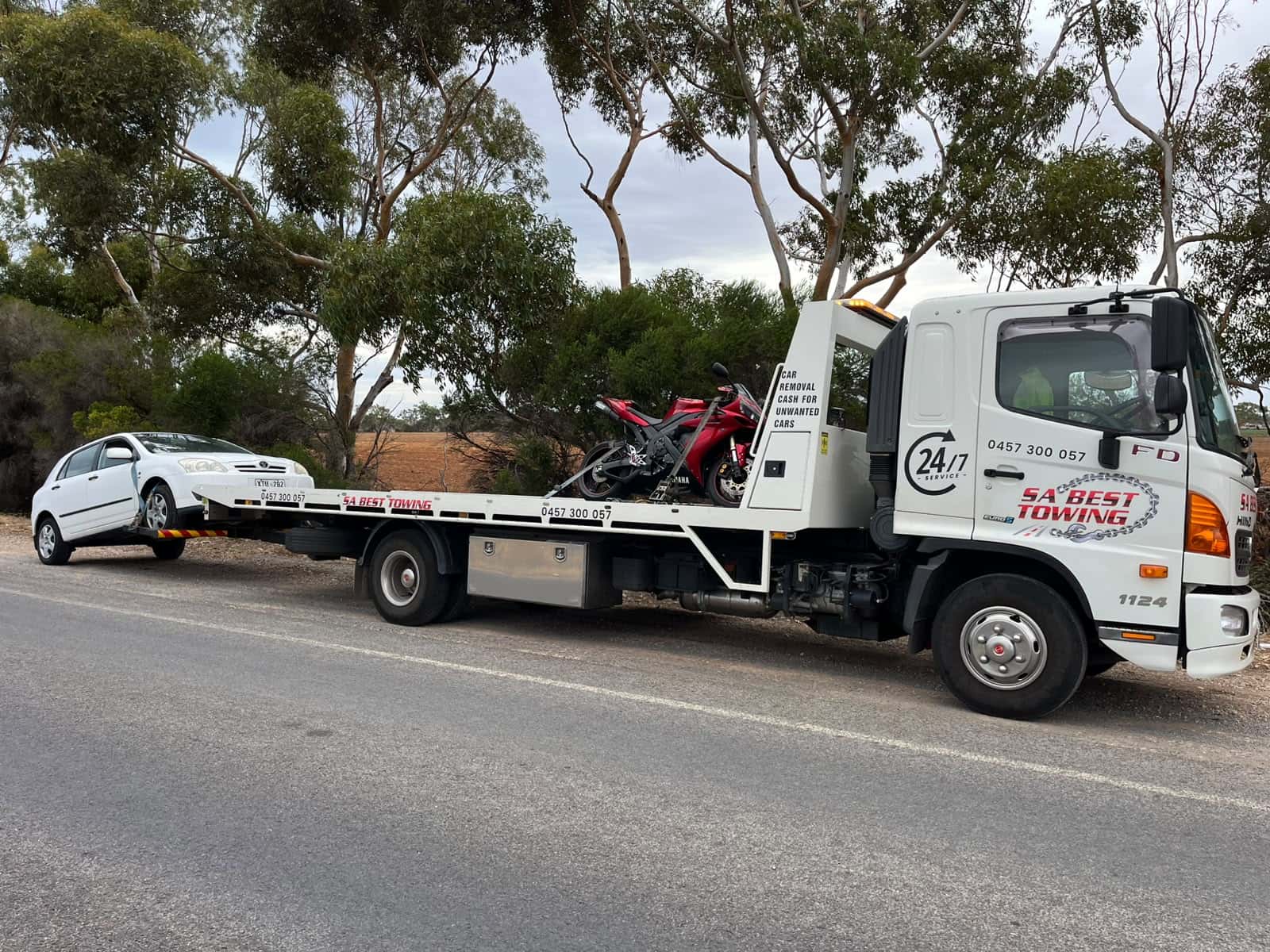
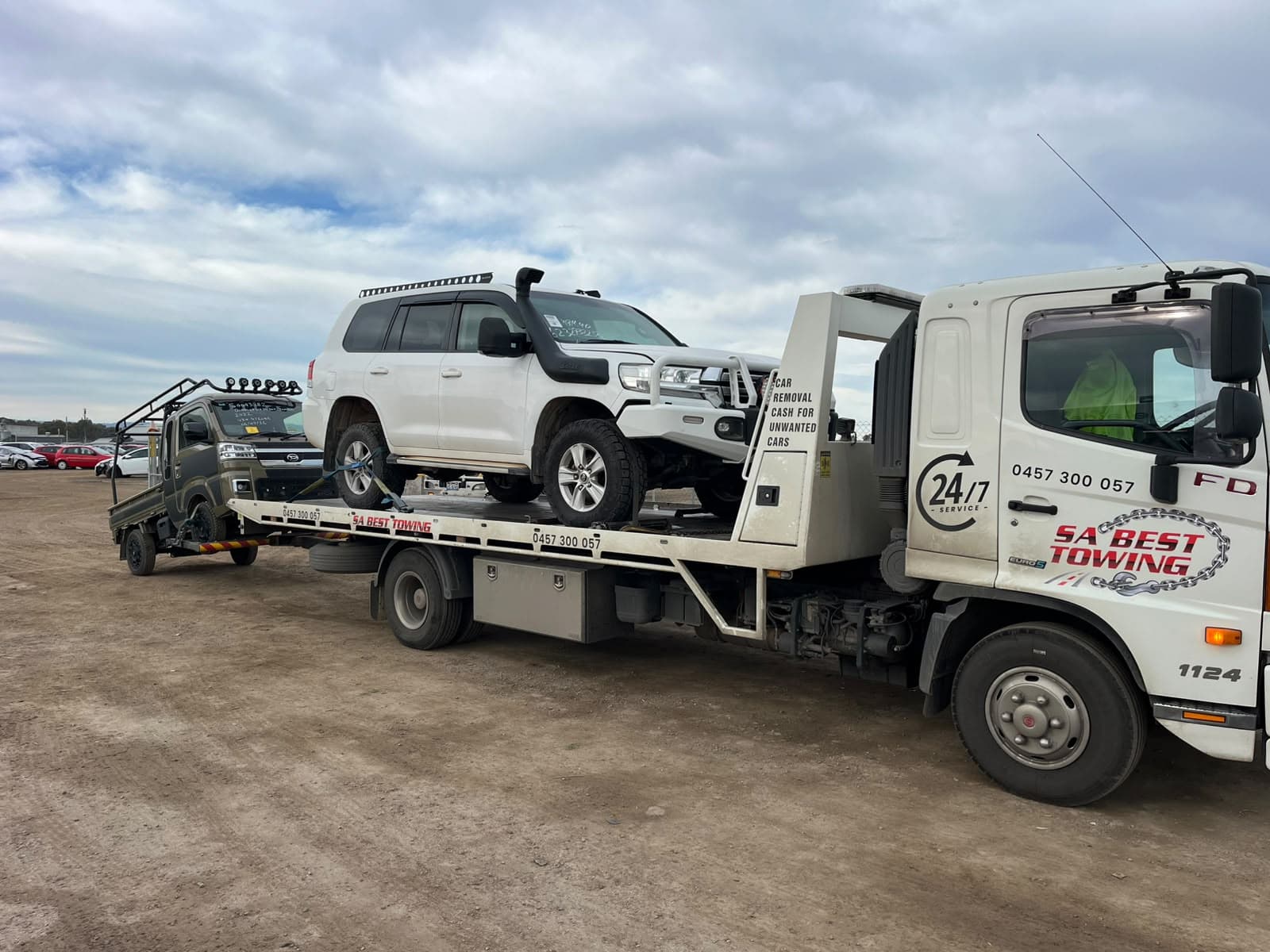
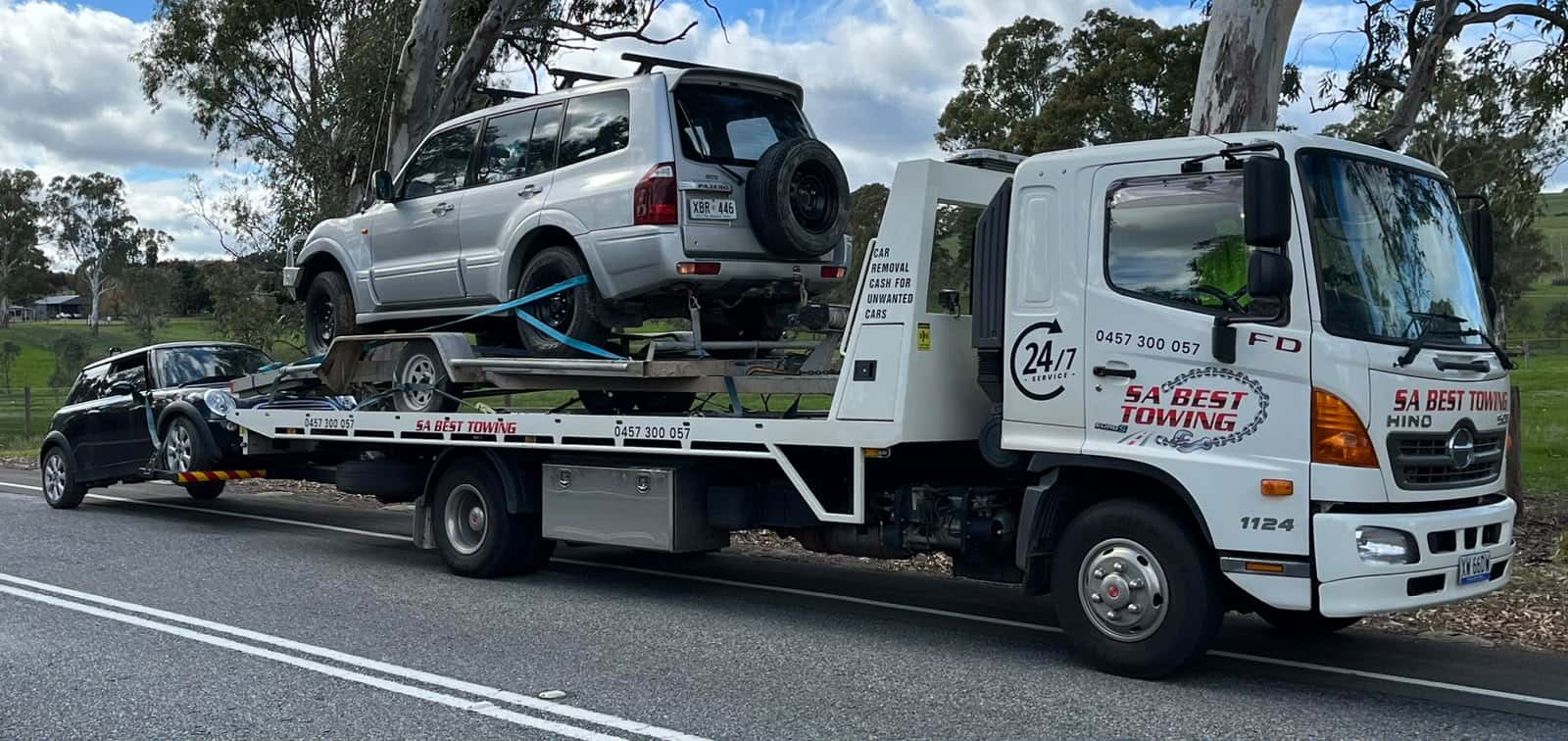
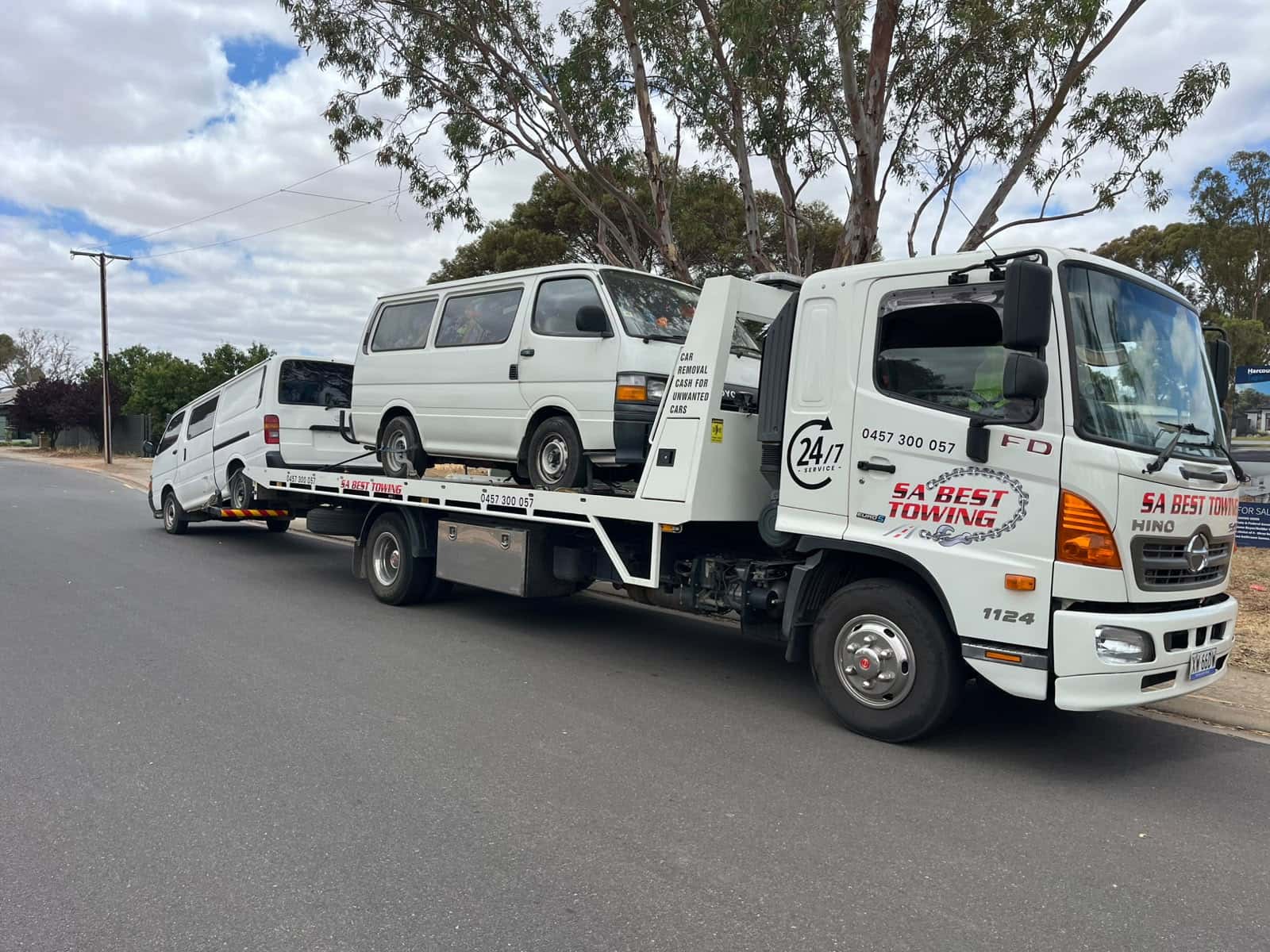
You can see it in the photos on this page: a Pajero on a car trailer with a Mini behind, a HiAce with a second van, a sports bike with a hatchback, and an Audi with a Ford Ranger.

The rear lift is for an everyday small car. A bigger vehicle goes on it only if it can be put in neutral, and if it can’t, it rides on the tray with the smaller one behind. All-wheel-drive and lowered cars ride on the tray too, and so does whichever vehicle is in worse shape. Moving two vehicles in one trip saves you booking a second tow.

What fits on the tray

Our tray is 6.5 metres long and carries up to 4 tonnes. Cars, utes, vans and 4WDs are the everyday loads, and our photos also show a motorhome, a curtain-side light truck, tractors and a forklift on the same deck. Give us the make and model and we’ll tell you straight whether it fits.
How the job runs

From the first call to the drop-off, in the order it happens.

  1. Both addresses and the vehicle

    Tell us the pickup, the drop-off, the make and model, and anything odd, like flat tyres or a second vehicle coming along.

  2. The price, settled first

    We give you the price on the phone before we book. If the job turns out different from what we were told, we talk to you before anything changes.

  3. Tray down, winch on, straps tight

    The driver tips the tray, winches the vehicle aboard and straps each tyre to the deck. A second vehicle goes on the rear lift last.

  4. Off at the other end

    We unhitch anything on the rear lift, then tip the tray and let the vehicle down on the winch so it rolls off under control.

Silver Mitsubishi Pajero on a car trailer carried on the tilt tray, a black Mini on the rear lift behind it
White Toyota HiAce van on the tray and a second white van towed on the rear lift, parked beside gum trees
Sports motorcycle strapped on the SA Best Towing tray with a white hatchback on the rear lift

What changes the price

Every job is priced on the phone before it’s booked. These are the things that move the number.

  • Distance between pickup and drop-off
  • One vehicle, or two with the rear lift
  • Size and weight of what’s going on the tray
  • Whether the vehicle rolls and steers
  • Late nights, weekends and public holidays
  • Tight access at either end

Common questions

Answers for people in the same spot as you. Anything else, call and ask.

Is a tilt tray the same as a flatbed tow truck?

They’re the same idea. Tilt tray, flatbed and slide tray all describe a truck with a flat deck that tips down so a vehicle can be winched on and carried with its wheels off the road. In Australia, tilt tray is the name you’ll hear most.

What is the difference between a tilt tray and a wheel lift tow truck?

A tilt tray carries the whole vehicle on its deck. A wheel lift raises one axle by the tyres and tows the vehicle on its other two wheels. The wheel lift suits a short tow of a two-wheel-drive car in neutral. The tilt tray suits all-wheel drives, low cars and anything that won’t roll.

What is a hook and sling tow truck?

It’s the oldest style of tow truck. Chains and a heavy sling wrap around the front or rear of the car, and a boom lifts that end while the other wheels roll on the road. The sling presses on the bumper, which cracks plastic bumpers on modern cars. Tilt trays and wheel lifts replaced it for car work.

Can one tow truck move two cars in one trip?

Ours can, using the rear lift. One vehicle rides on the tilt tray. The rear lift raises one end of the second vehicle, which rolls behind on its other axle, and the driver picks which end to lift. The lift suits an everyday small car, and a bigger one has to go into neutral. All-wheel-drive and lowered cars go on the tray. Tell SA Best Towing about both vehicles when you call.

Does my car need to be in neutral to go on a tilt tray?

It helps. A car in neutral with the handbrake off rolls up the tray as the winch pulls. If you have the keys, have them ready so the car can be put in neutral. A car stuck in park or in gear can still be winched on, but tell us first so the driver plans the load.