Skip to content
SA Best Towing
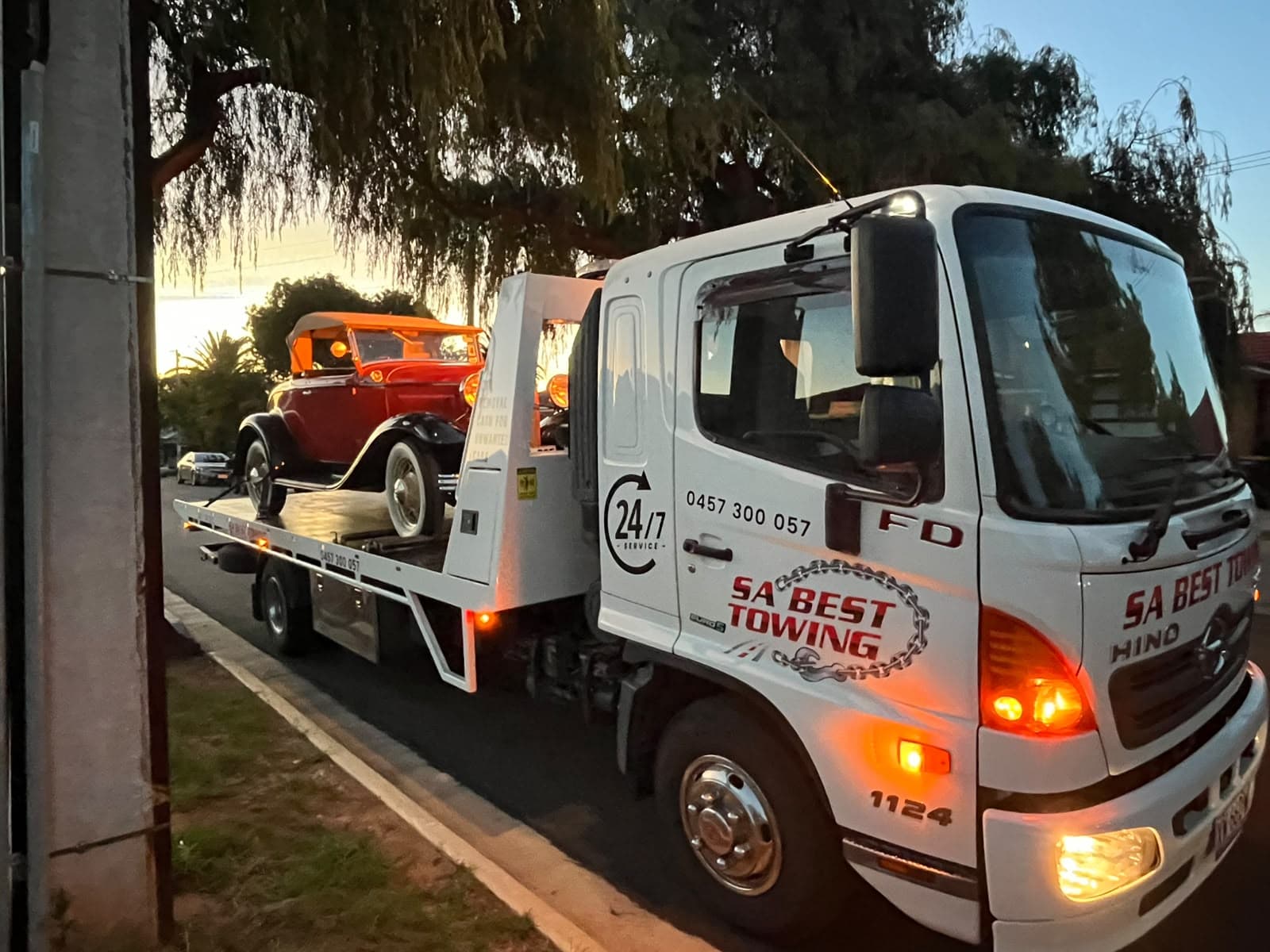
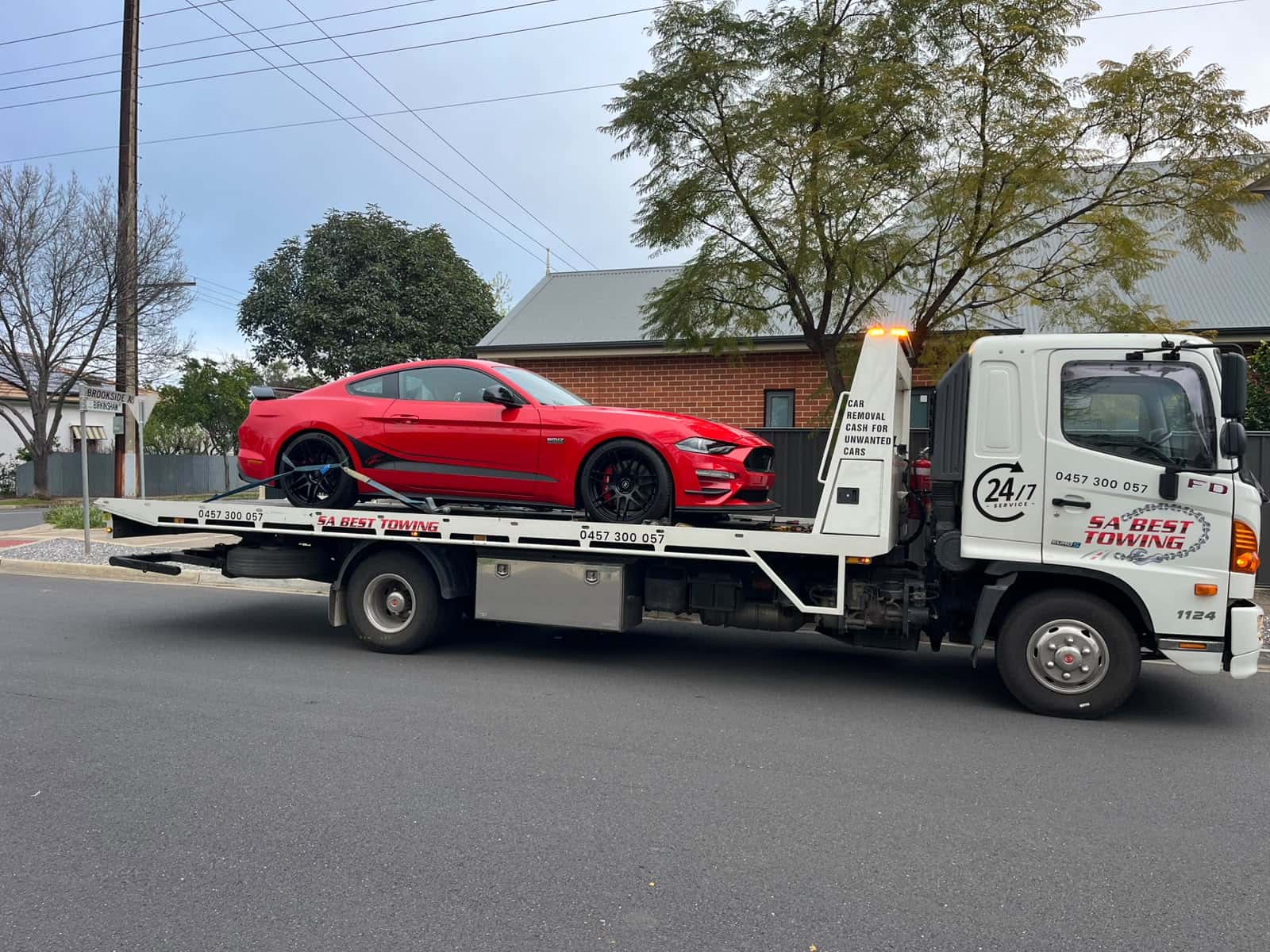
Red Ford Mustang GT on the SA Best Towing tilt tray, a strap through its rear wheel, on a suburban street

Prestige and lowered car towing in Adelaide

Low cars and expensive cars go up the tray at the flattest angle we can get. Straps go over the tyres, and the winch pulls at crawl speed.

Call 0457 300 057
4.8 on Google from 41 reviews

In short

A lowered, prestige or electric car should travel on a tilt tray with all four wheels off the road, loaded at a low angle and strapped through the wheels. SA Best Towing does this across Adelaide from its yard in Angle Park. Bookings on 0457 300 057.

Jobs we can take

A lowered car booked in at the tuner

Coilovers wound down, a front lip, and a workshop driveway it can’t clear on its own wheels.

An SUV sitting on its bump stops

An air suspension fault has dropped it too low to drive, and too low for a steep loading angle.

An EV that won’t wake up

The 12-volt battery is flat, the screen is dark, and the car is stuck in park in a shopping centre car park.

A prestige car with crash damage

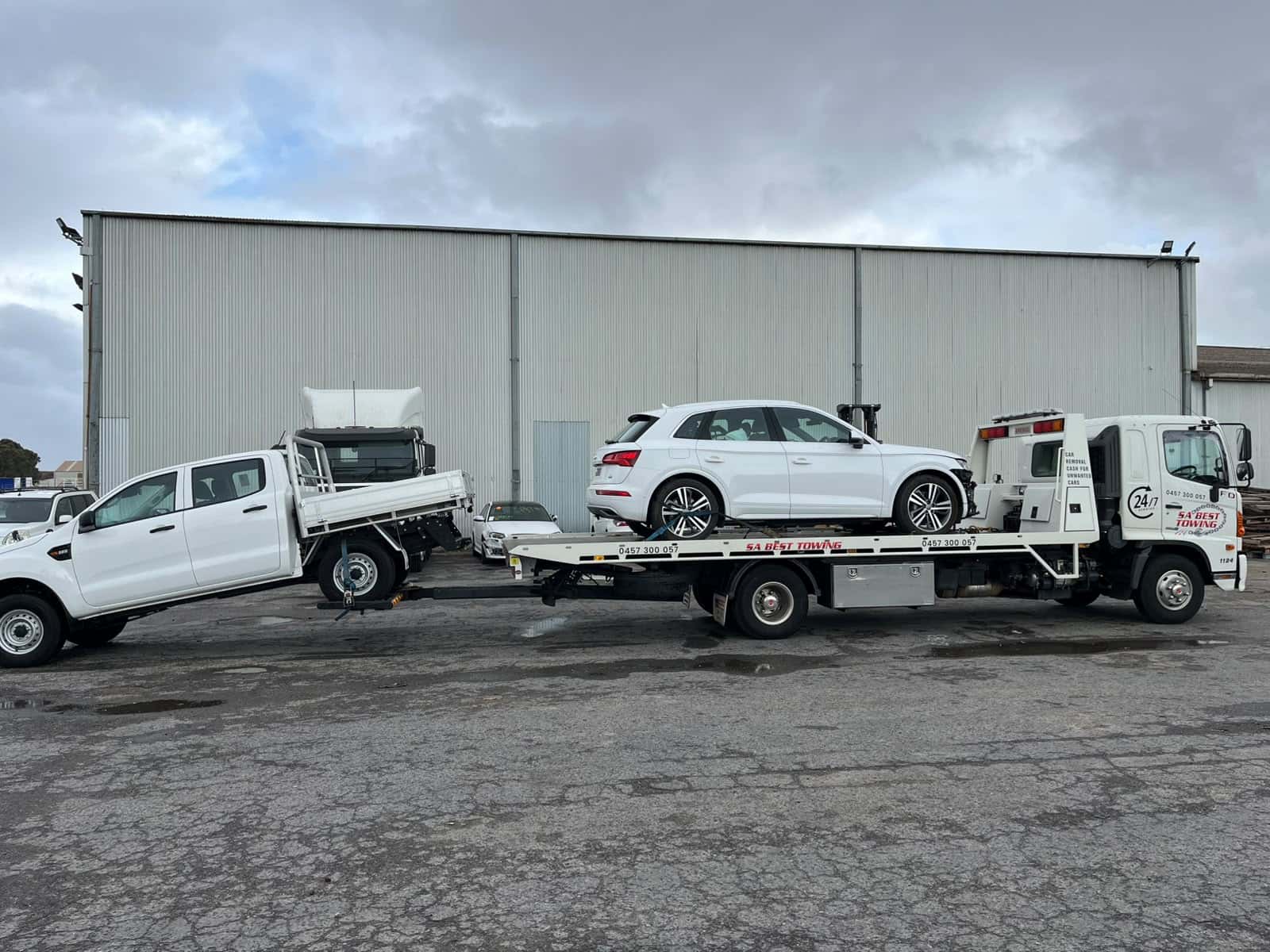
A front-end hit like the white Audi in our photos. The roster tow truck clears the scene, then we move the car from the holding yard to the repairer your insurer chose.

Where a low car can catch on a tilt tray

The risky spot on a tilt tray is the break-over, where the tilted tray meets the road. A lowered car with a front lip reaches it bar first. We tilt the tray until its tail sits flat on the bitumen, so the angle at that edge is as low as the truck allows. Give us the ride height and any lip when you ring, and we’ll tell you whether the car suits the tray.

The winch does the climbing. We hook the cable to the car’s tow point and pull at crawl speed, watching the gap under the bar as the car climbs.

Straps over the tyres

In the Mustang photo, the strap loops through the rear wheel and over the tyre, and the ratchet pulls rubber down onto the tray. The paint, sills and undertray carry no load, and the suspension stays free over bumps. Chains on a chassis rail squash the springs and can mark a painted underbody, so cars get straps and the chains stay for machinery and trucks.

Your car gets the tray. The rear lift raises one end of a second vehicle, which rolls behind on its other axle, and the driver picks which end to lift. It suits a work ute like the Ranger behind the Audi in our photos. All-wheel drives and lowered cars ride on the tray.

Electric cars and the park lock

Most EV makers want their cars carried with all four wheels off the road, and a tilt tray covers that. Getting the car to roll is the harder part. Many EVs hold themselves in park until they’re awake and in a tow or transport mode, and a flat 12-volt battery can stop that happening.

Tell us the make and model and whether the screen lights up. If the car won’t release park, we talk through what the manufacturer allows before anyone pulls on it.

Air suspension needs setting before the straps go on

Plenty of prestige SUVs and sedans ride on air suspension. If the car runs, raise it to its highest setting before loading and switch on its jack or transport mode if it has one. Otherwise it can sink on the tray and slacken the straps on the way.

Classic cars and hot rods have their own page, covering show runs and cars coming out of long storage.
How the job runs

From the first call to the drop-off, in the order it happens.

  1. Tell us about the car

    Make, model, ride height, any lip or splitter, whether it runs, and where the tow point lives. We agree the price on that call.

  2. Photograph it first

    Before it moves, photograph each side of the car yourself, so you have a record of its condition.

  3. Load low and slow

    Tray flat to the road, winch on the tow point, eyes on the gap under the bar.

  4. Strap, drive, unload

    Straps go over the tyres. At the other end the car comes off at the same angle and speed.

White Audi Q5 with front-end damage on the tilt tray, a white Ford Ranger ute towed behind on the rear lift
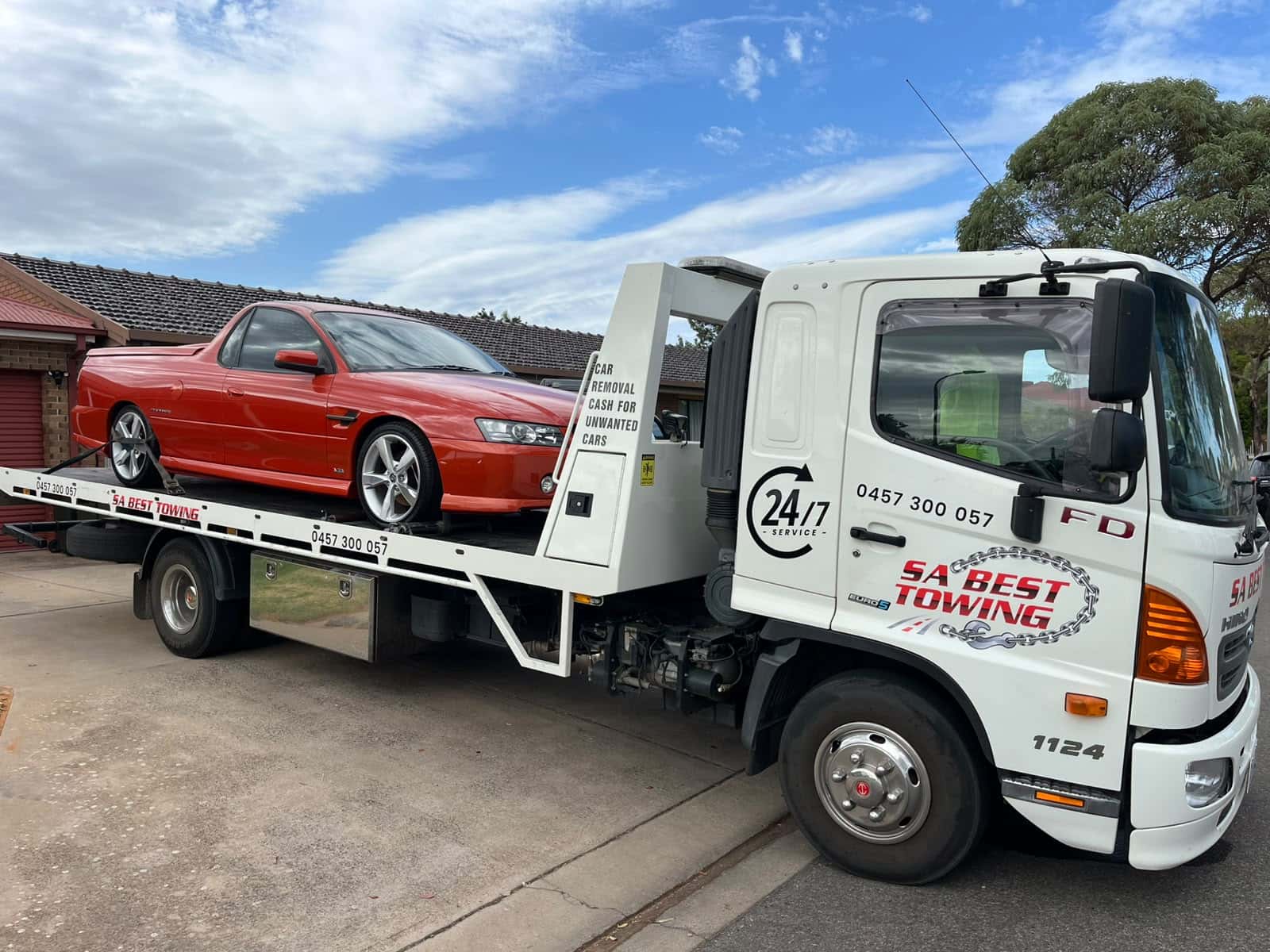
Red Holden Commodore ute strapped through its rear wheel on the SA Best Towing tilt tray in a driveway

What changes the price

Every job is priced on the phone before it’s booked. These are the things that move the number.

  • Distance from Angle Park to the car, then on to the drop-off
  • Extra loading time for very low cars
  • Whether the car rolls, steers and brakes
  • Access, such as a tight garage or a steep driveway
  • Night, weekend and public holiday bookings

Common questions

Answers for people in the same spot as you. Anything else, call and ask.

Can a tilt tray tow a lowered car without scraping?

It depends on the ride height and any lip or splitter. We lay the tray flat on the road and winch at crawl speed, watching the bar the whole way up. Tell us both when you ring, and we’ll say whether the tray suits the car.

Can you tow an electric or hybrid car?

We carry them on the tray with all four wheels off the road. Hybrids get the same treatment, since their electric motors connect to the wheels too. The car needs to be awake and in its tow or transport mode so it rolls. If the 12-volt battery is flat and it won’t release park, tell us before we come.

Can you tow a car with an electronic handbrake and a flat battery?

Tell us before we come. An electronic handbrake needs power to release, so a flat battery can leave the rear wheels locked. Some cars have a manual release described in the owner’s manual. If yours won’t release, the winch draws it up the tray slowly.

Is my car covered from the weather on the truck?

No, the tray is open. If rain is forecast, ask about moving the booking, or fit a car cover and tie it down hard. A cover flapping at highway speed rubs the clear coat, so a loose one can do more harm than a shower of rain.

Do you photograph my car before towing it?

Ask when you book, and take your own photos either way. Before the car moves, photograph each side, the wheels and any marks already on it. Keep them until the car is delivered, so you have a record of its condition before and after the tow.