Start with the make and model
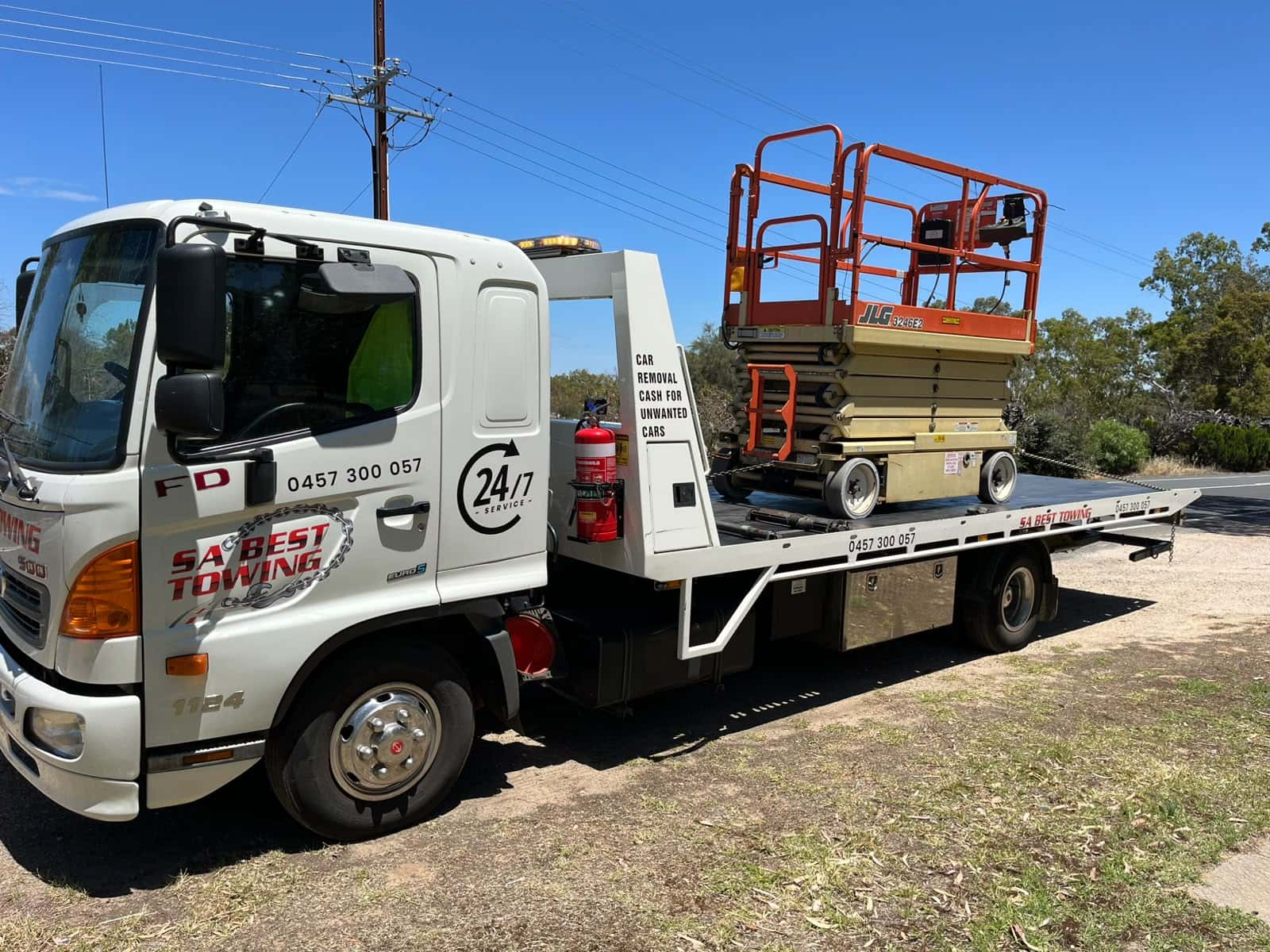
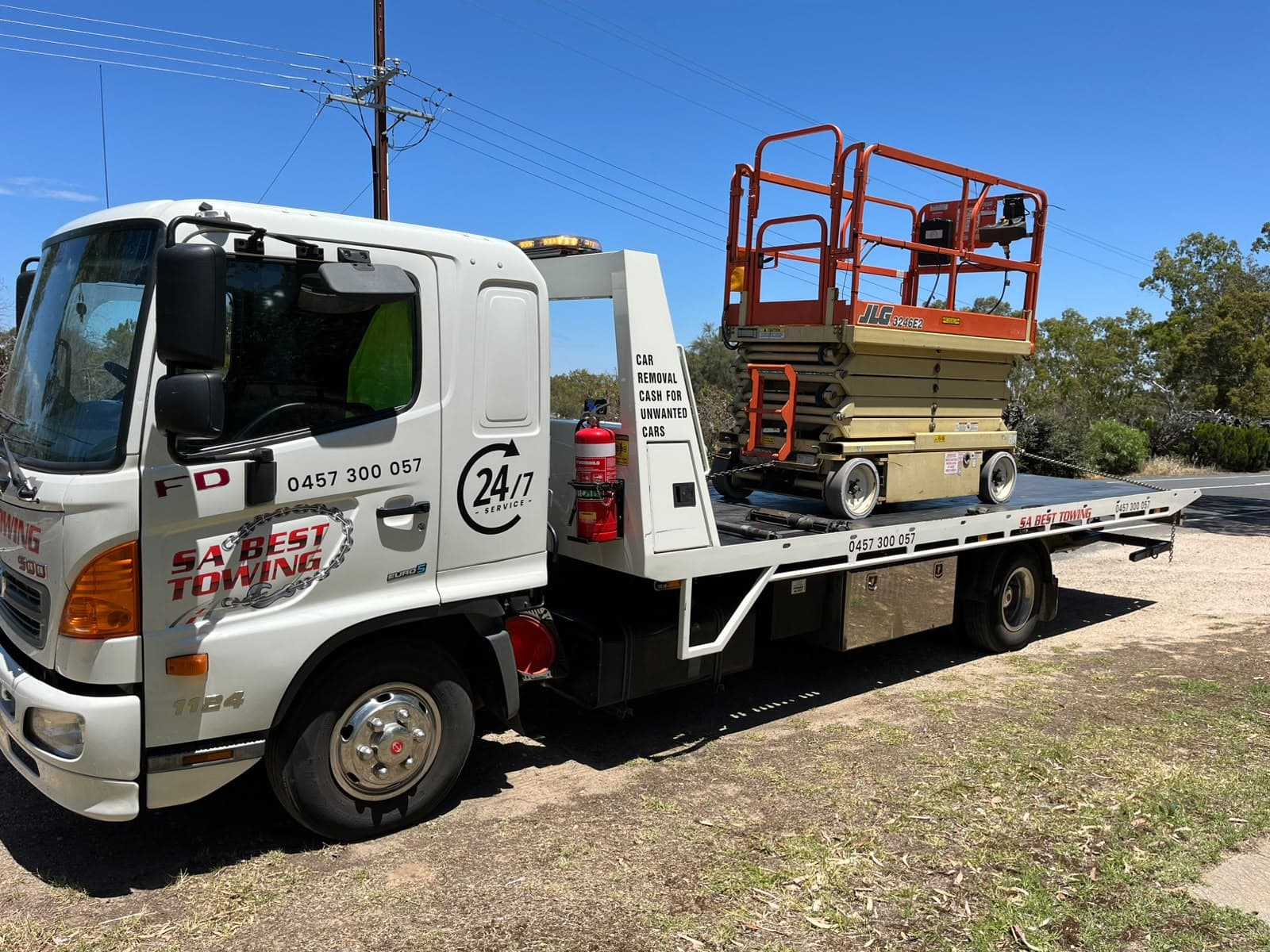
We work out the weight from the make and model. The orange JLG in our photos has its model number, 3246E2, on the platform guard at the top, and a number like that gives the weight and size from the maker’s specifications.
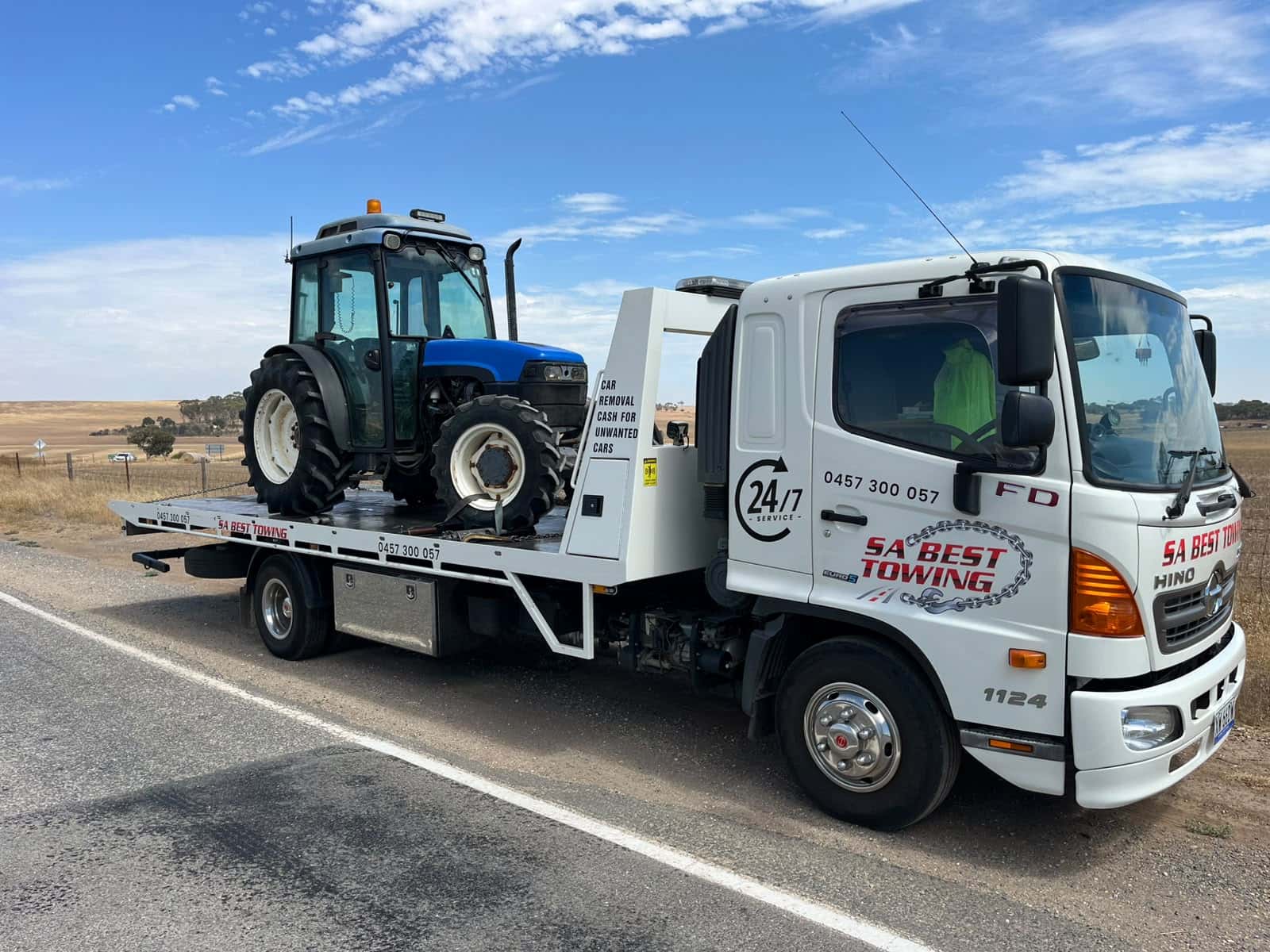
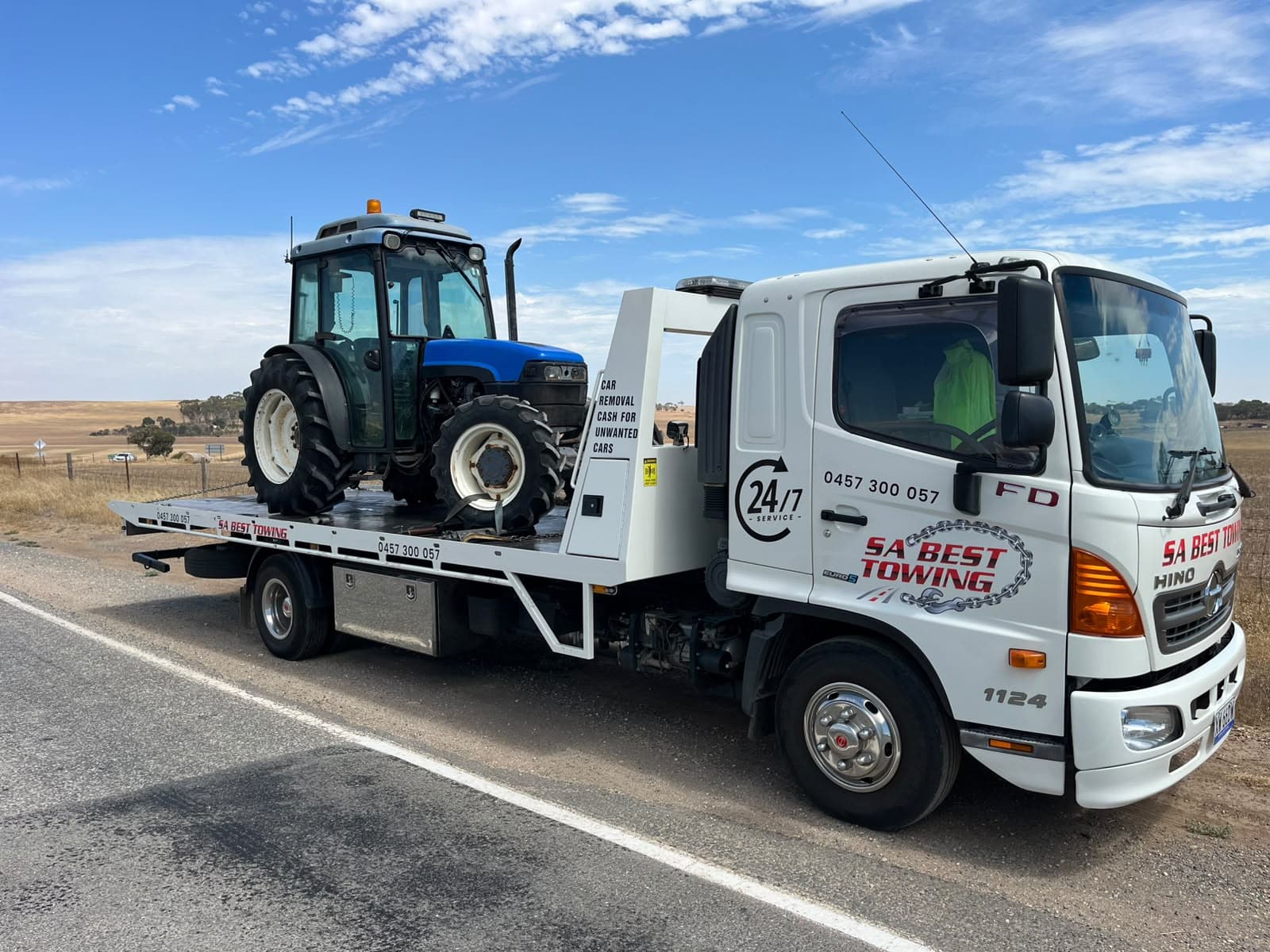
Send a photo of the compliance plate if you can find it, and mention anything added since the machine left the factory, such as a front loader on a tractor or a cage on a forklift. Attachments change the numbers. If the machine is too heavy or too tall for our tray, we say so on the phone and suggest a low loader instead.
Chains, tie-down points and height
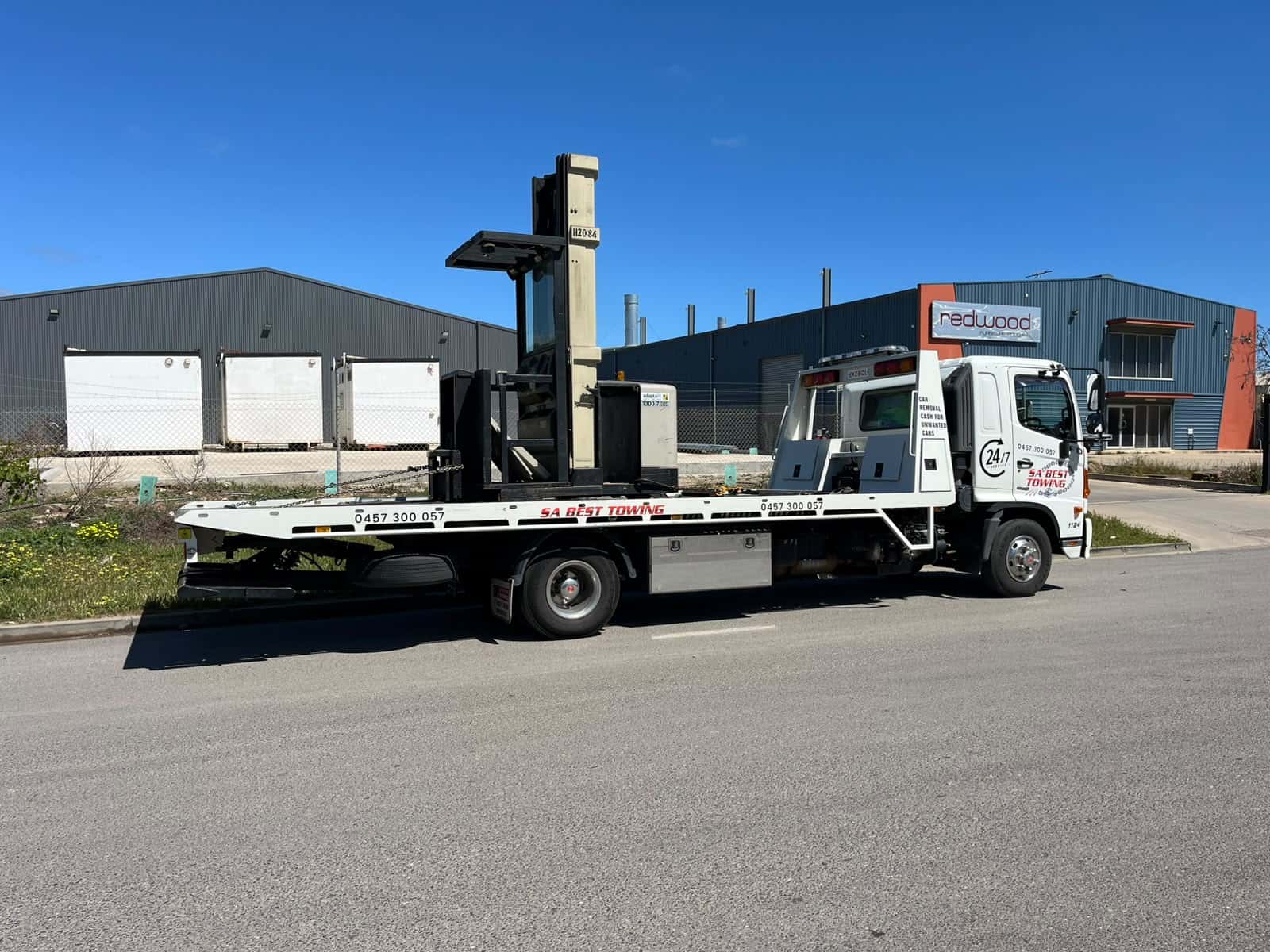
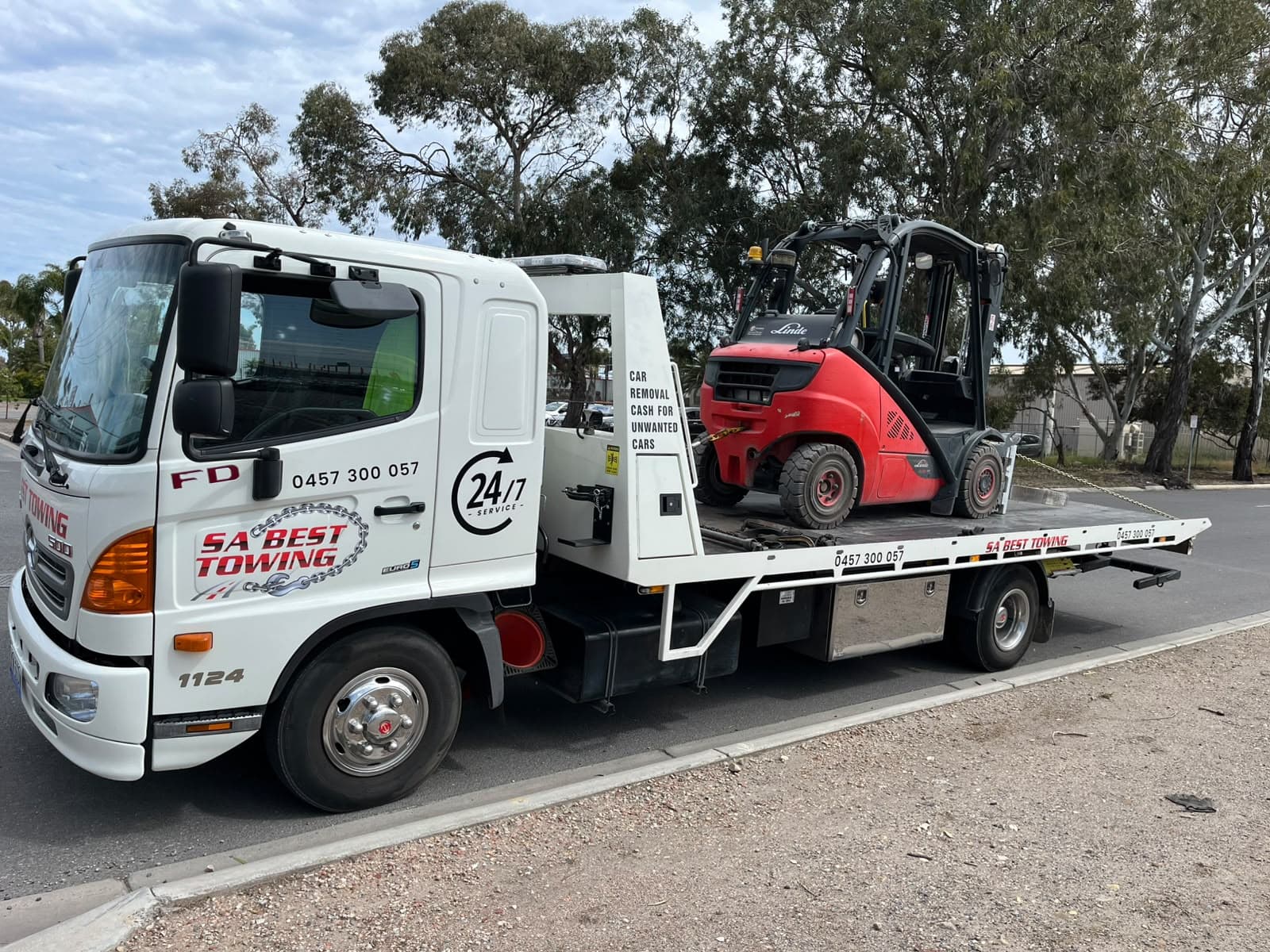
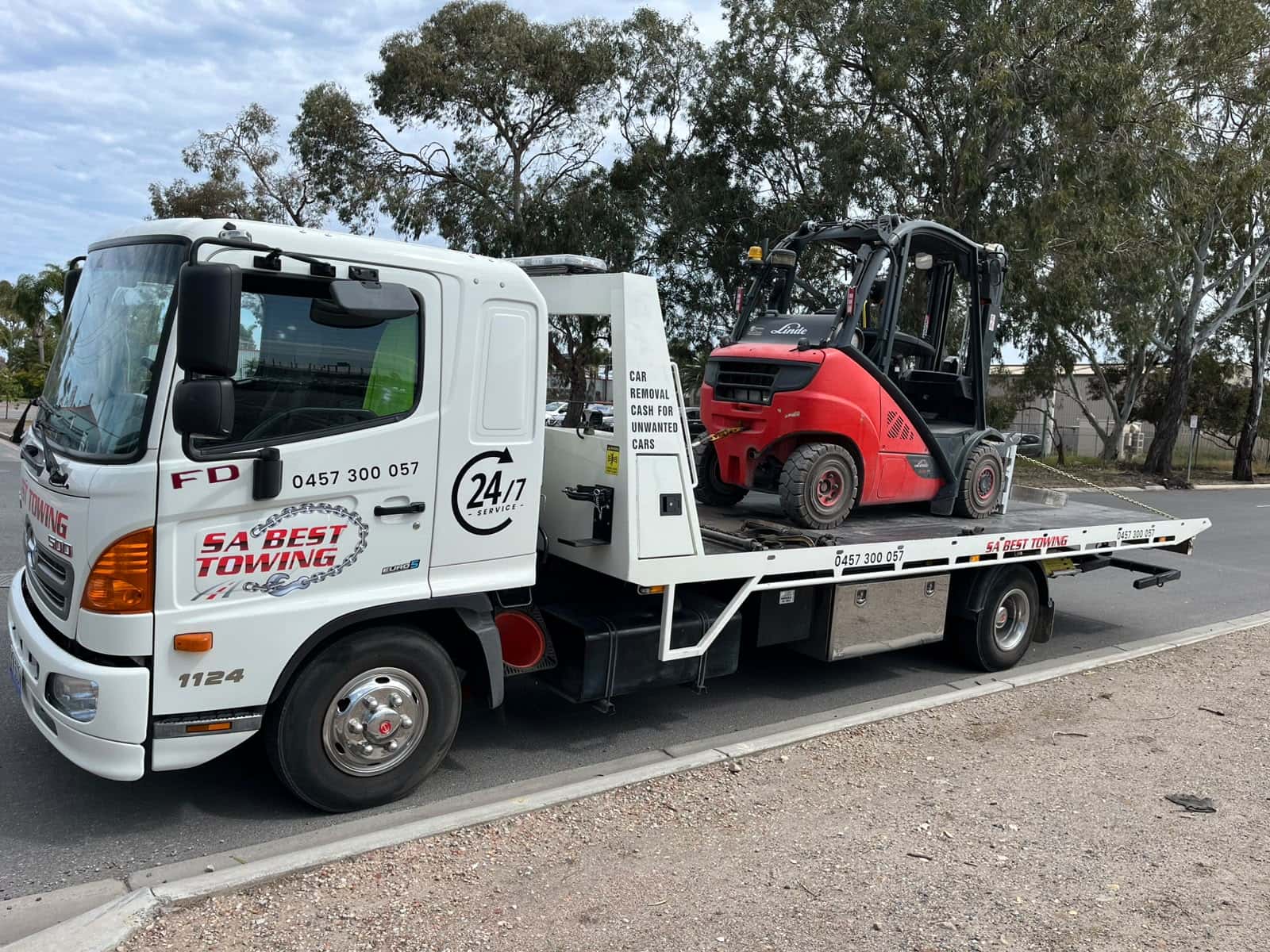
Machinery is the job where chains belong. Forklifts, lifts and tractors have tie-down lugs and axle points built to take them, and you can see the chains running from the tray to the red Linde and the JLG in our photos. We chain each machine front and back so it can’t walk forward under braking.
A mast or a cab adds to the tray’s own height, and some streets have low wires and branches. Give us the lowered mast height or the cab height, and we’ll tell you before we quote whether it can travel on our tray.
Getting a machine ready for the truck
Lower the forks or the platform and tilt the mast back. Turn off the gas bottle on an LPG forklift and flip the battery isolator if there is one. Clear loose tools and pallets off the machine, and leave the key on site. If it runs, we drive it up the tray ourselves. Ghulam holds a forklift licence, and customers don’t drive anything onto the tray, not even a car. If it doesn’t run, the winch draws it up the tray slowly, with the brakes released the way its manual describes.
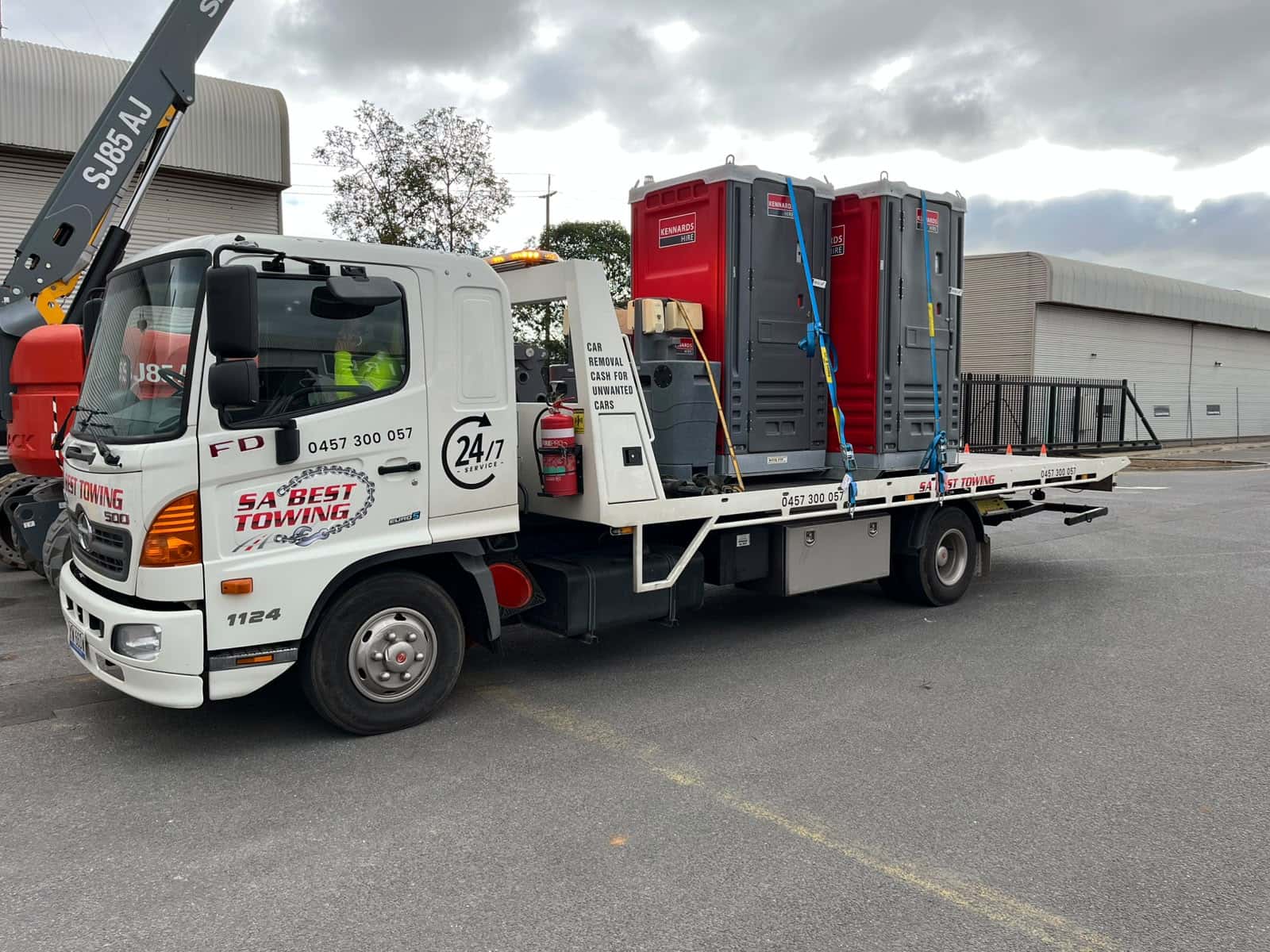
Have portable toilets pumped out before they travel. The two in our photos stand upright beside a hand-wash unit, with a ratchet strap around each.