Spend a few minutes with the car before the truck arrives and the loading goes quicker, with less risk to the car. Most of it comes down to things only you know, like where the spare key is or that the car scrapes on driveways.
Take out what you’ll need while the car is away
The car may sit at the workshop for days. Take your phone, wallet, house keys and garage remote, plus sunglasses, medication and any paperwork you keep in the glove box. Check the centre console, the door pockets, under the seats and the boot. If you’ll need a child seat in another car, take it out now.
Photograph the car before it moves
Walk around the car with your phone and photograph it from the front, the back and both sides. Add close-ups of any scratches, dents or cracked glass that are already there. Your phone stores the date with each photo, so you have a record to show your insurer or the workshop if a question comes up later.
Find the keys and any codes
A car with its key loads faster. Without one, the steering may stay locked with the wheels turned, and plenty of automatics won’t leave Park. Give the driver the car key on its own and keep your house keys. If the car has a kill switch, a battery isolator or a security code to start it, write it down for the driver.
Switch off the alarm and warn the tracking company
An alarm that sounds as the tray tilts holds up the loading. Switch it off, or leave the remote with the driver. If the car has a GPS tracker or a fleet immobiliser, tell the tracking company or your fleet manager it’s going on a tow truck, so the movement doesn’t set off a theft alert.
Check the extra steps for EVs and electronic handbrakes
Electric cars and hybrids ride on the tray with all four wheels off the road, and many need setting to their tow or transport mode before they’ll roll. Look it up in the owner’s manual or the screen menu before the truck arrives. If the battery is flat, an electronic handbrake may stay on, so mention it on the call. The specialty vehicle towing page goes through EVs, air suspension and electronic handbrakes in more detail.
Take off racks and carriers, and mention low bodywork
Take off bike carriers, roof pods and anything clipped to the outside that could work loose at highway speed. A roof rack that’s bolted on can stay, empty. Strap down or remove anything loose in the boot and on the back seat.
Low bodywork needs a shallow loading angle. Tell the operator about a front lip, side skirts or lowered suspension, and how low the car sits. A tilt tray tips its deck to the road at a gentle slope for cars like this, and the driver watches the front of the car on the way up.
Tell the operator what’s wrong with the car
Each of these changes how the driver plans the load, so give them when you ring:
- whether it rolls, steers and goes into neutral
- flat tyres, a bent rim or a wheel that won’t turn
- fluid leaking under the car
- crash damage, such as loose panels or a door that won’t shut
- a second vehicle at the same address that needs to go too
A second vehicle can make the same trip on the truck’s rear lift. All-wheel-drive and lowered cars take the tray.
Clear a straight run for the truck
A tilt tray lines up in front of the car and lays the end of its deck on the ground, so it needs a clear, straight run to the car and height above it to tilt. Move other cars, bins and trailers out of the driveway. In a basement or an undercover car park, read the clearance height at the entrance and pass it on, since a tilt tray can’t tip its deck under a low roof. If there’s a gate code, or someone needs to meet the driver with a fob, sort that out on the call.
At the kerb, the tray tilts and the straps go on
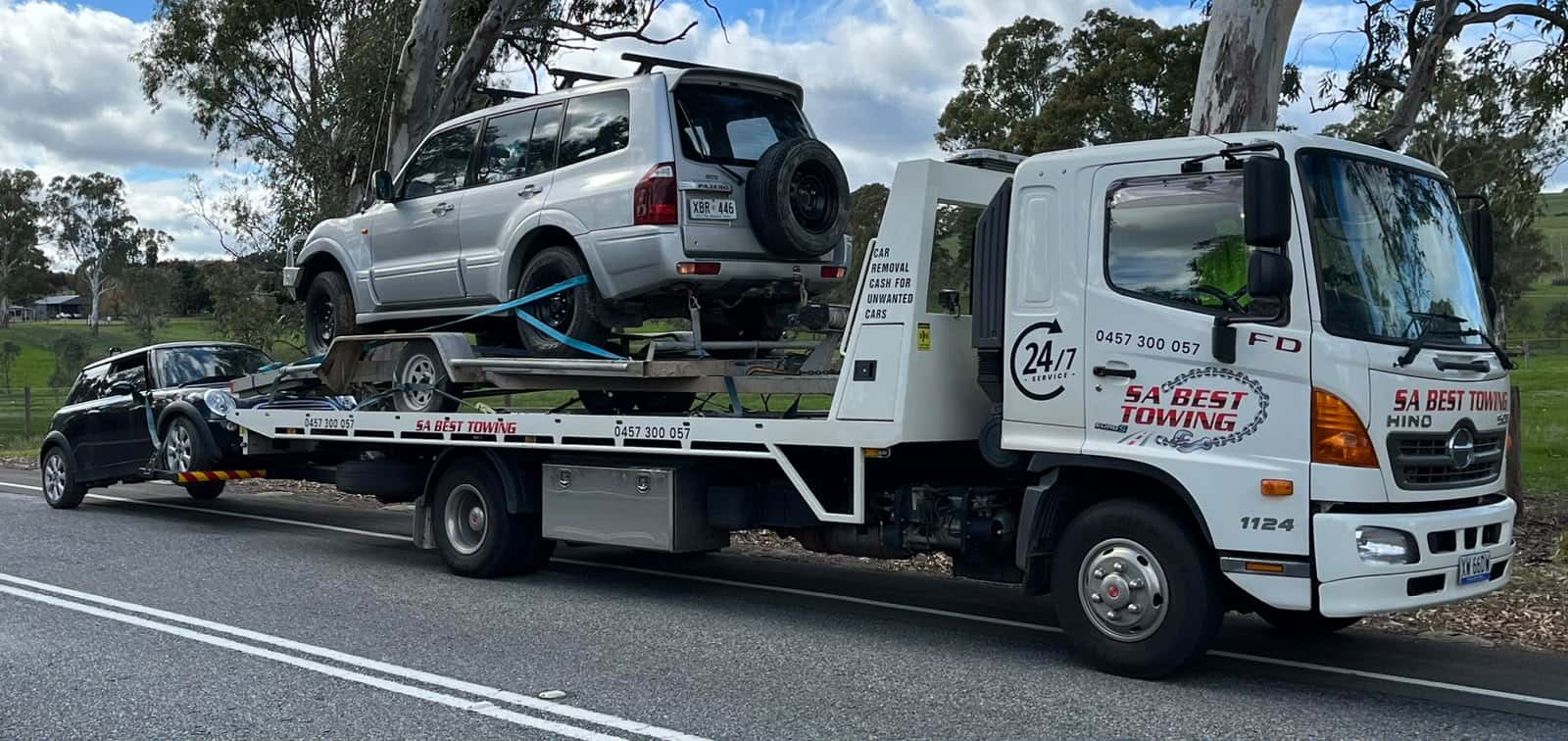
The driver parks in line with the car, switches on the amber beacons, looks over the spot and explains how the car will go on. The tray tilts back until the end of the deck touches the road. If the car runs, it can be driven up. If it doesn’t, the winch draws it up the tray slowly. Once the deck levels out, a strap goes over each tyre and ratchets down, so the car rides on its own suspension with all four wheels off the road.
Wait somewhere safe, off the road, while that happens. Tell the driver where the car is going and who will take the key at the other end. If you can’t be there for the pickup, say so when you book and ask if the driver can collect it without you there. You can ride in the truck with the car, so you don’t need another way home. Say on the phone if more than one of you needs a seat.
Call SA Best Towing on 0457 300 057 with the make and model, where the car is, where it’s going and anything from the lists above. You get the price on that call, before you book. For hatches, sports cars and EVs, see car towing.